

FWC Increase 2026
FWC approved a: - 4.75% increase in most Award rates; and - 5.97% increase to the National Minimum Wage (NMW) which takes effect from the first full pay period after 1 July 2026.
Read more
Topic
33 articles from our Tips & Trends archive.
FWC approved a: - 4.75% increase in most Award rates; and - 5.97% increase to the National Minimum Wage (NMW) which takes effect from the first full pay period after 1 July 2026.
Read more

Existing WHS and workplace laws already require employers to manage the risks posed by artificial intelligence and they cannot outsource responsibility to technology the Federal Government has confirmed, but further regulation targeting AI is likely to occur on a jurisdiction by jurisdiction basis as adoption accelerates, particularly as NSW has already amended its WHS Act to explicitly require employers to manage WHS risks from AI, algorithms and digital platforms.
Read more

From 1 July 2026, employers will be required to pay superannuation with every pay cycle, not quarterly. Super will need to be calculated at 12% of qualifying earnings (a broader base than ordinary time earnings) and paid so it reaches employees’ super funds within seven days of payday. The ATO will monitor compliance in near real time, with stronger enforcement powers.
Read more

FWC recently in Mr Firas Raghib v Stantec Australia Pty Ltd [2025] FWC 2335 found that a senior HR manager’s fabrication of a text message to undermine a colleague’s complaint amounted to serious misconduct and justified his summary dismissal—even though the employer’s process had procedural flaws.
Read more

The Australia Day public holiday falls on Monday, 26 January 2026 and planning on how do deal with roster patterns that require work on this day should nearly be finalized by now.
Read more
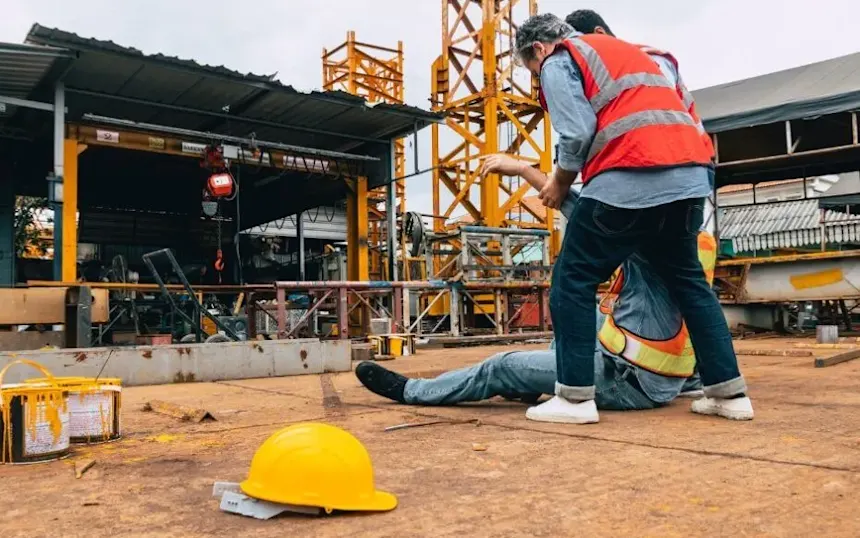
NSW District Court recently in SafeWork NSW v Momentum Consulting Group Pty Ltd [2025] NSWDC 400 found that a labour-hire company could not rely on a “mistake-of-fact” defence after one of its workers suffered a catastrophic injury while operating machinery at a host employer’s site.
Read more

SafeWork NSW recently issued a prohibition notice to the University of Technology Sydney (UTS), ordering it to pause its staff downsizing program due to serious concerns about psychological harm to employees.
Read more

Victoria finally joined the Harmonised WHS States in creating Regulations and a Compliance Code to manage Psychosocial Risks. They will take effect from 1 December 2025.
Read more
Yes. SafeWork NSW recently accepted a $700K+ enforceable WHS Undertaking from an employer, in lieu of prosecution arising out of an electric shock incident with more than half of the costs dedicated to implementing a comprehensive psychosocial risk management process and rolling out a three-tiered safety training program.
Read more

A resounding “Yes” according to FWC (Thien Huy Xuan Dang v Coca-Cola Europacific Partners Australia Pty Ltd (U2023/1175)) after the employer was found to have fairly dismissed a worker who regularly and deliberately set their cruise control above the speed limit.
Read more

FWC recently upheld (Sheldon Haigh v Platinum Blasting Services Pty Ltd [2023] FWC 2465) the dismissal of an employee for failing, as per the employer’s policy, to disclose his use of prescription medical marijuana even though he disclosed it during a testing process and passed the test.
Read more

Employers know the high costs of recruitment and retention. “Quiet quitting” and the “War for Talent” remain consistent commentary in HR circles. But it seems that a Dortmund University study in Germany has once again confirmed what most good HR managers already know - employees leave managers not organisations - by finding a link between destructive leadership and high levels of early retirement and extended sick leave.
Read more

Recent action by the Australian Securities and Investments Commission (ASIC) has made it clear that it is serious about Whistleblower compliance and that Employers need to keep on top of its compliance actions.
Read more

Yes. In Bell v Nexus Primary Health, the Employer was held liable for its Employee’s sustained psychological injury and ordered to pay $1.24M in damages after the Employee (a family outreach worker) was attacked by the husband of a previously assessed high risk client while on the way to work. This attack occurred when she was exiting her car outside her doctor’s office which resulted in the Employee suffering from PTSD and rendering her unable to work. The Employee was also subjected to further threats and even had bricks thrown through her house window.
Read more

In a recent ruling, the NSW District Court has regretfully made comment that it seems the general deterrence message of PCBU penalties for safety breaches is “not getting through to employers who require their workers to work at height – inherently dangerous work.”
Read more

The new Labor government has made good on its promise to implement all of Kate Jenkins’ 55 Respect@Work recommendations by introducing a Bill to Parliament. The Bill is not yet law but its passage is unlikely to be significantly amended.
Read more

Overpayment to employees is just as common as underpayment. While overpayment itself is not unlawful, rectifying overpayments by clawing back this amount can be a tricky process and if not done correctly, can be unlawful.
Read more

Yes, but only if there are reasonable grounds to do so.
Read more

During the initial stages of COVID-19, employers struggled with the new territory of an enforced WFH workforce and an increased reliance on IT. Then workplaces gradually adjusted and improvements were genuinely made. Now as we hopefully near the tail end of COVID-19 it appears, according to a recent University of South Australia study, that workplaces still have some further work to do as the full effects of WFH and IT on work-life conflict, employee mental and physical wellbeing, and work engagement become better identified. Whilst some employees have thrived during the new arrangements, others have either continually failed to adjust or now have become ‘fatigued’ by the changes as the ‘novelty’ of the new arrangements wears off.
Read more

Now more than ever it is important for employers to ensure that their workplaces are safe from not just physical but psychological harm as well. Part of this includes monitoring communication between staff members and reminding employees that ‘venting’ frustration to another colleague is not a ‘free pass’ to make inappropriate and denigrating comments about other employees – even to their managers.
Read more

The damages awarded to applicant’s who successfully establish sexual harassment in the workplace are substantial, and rapidly rising.
Read more
The procedural steps taken during the termination process are crucial. In a recent FWC decision Mr Simon Ronchi v Johns Lyng Group [2022] FWC 326 (available here) FWC has again emphasised the importance of procedural fairness during the termination process, even where there is a valid reason for dismissal.
Read more
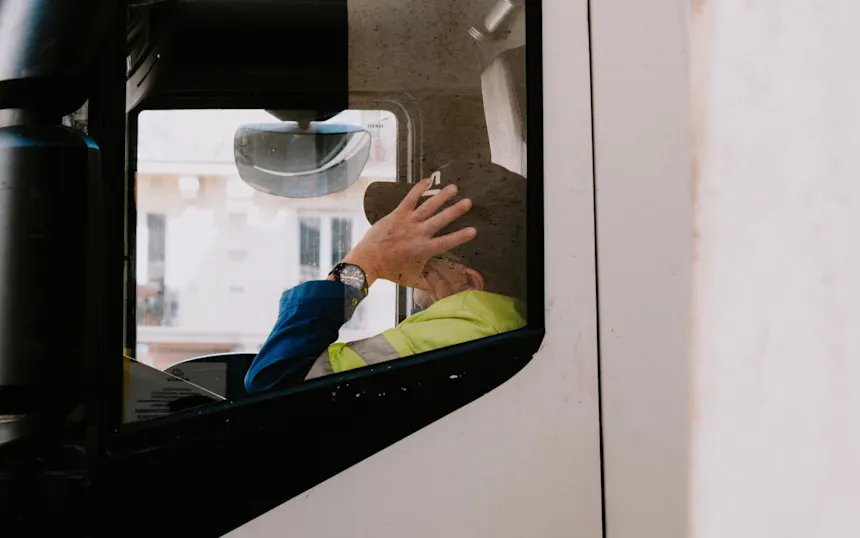
In a recent Fair Work Commission (FWC) decision (Sydney Trains v Andrew Bobrenitsky), a full bench unanimously overturned a previous ruling which found that an employee’s out of hours conduct (drink driving charge) did not constitute a valid reason for termination.
Read more

A South Australian tribunal decision provides a caution to employers who provide non-work related benefits to their employees while on work trips.
Read more

Unfortunately, the answer to this is not what most employers had hoped for and is still a little unclear.
Read more

Most likely yes, if you have an objective reason for requesting the evidence.
Read more

In a recent Fair Work Commission (FWC) decision (Steve Petkovski v M J Luff Pty Ltd T/A Border Express [2021] FWC 5936), the FWC found that a termination letter was sent to an employee’s defunct email address did not constitute a reasonable means of communicating the dismissal. Instead, the dismissal was effective 5 days later when the termination letter was received by registered post.
Read more

The short answer: yes –but it might look a bit different.
Read more
The activity around COVID-19 vaccinations has not abated. The trend (at this stage) is indicating an increasing number of businesses continuing to push ahead with mandatory compliance via their own policy.
Read more

Tasmanian businesses are currently dealing with a Public Health Direction compliance deadline of 21 November 2021.
Read more
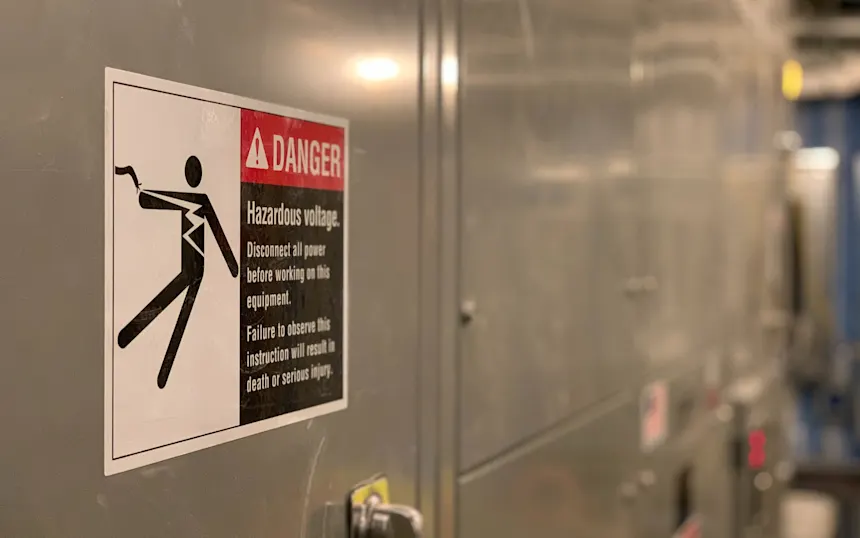
As of 28 May 2021, New South Wales became the first jurisdiction in Australia to introduce the Code of Practice: Managing Psychosocial Hazards at Work.
Read more

The following headlines arising out of 3 recent WHS prosecutions should worry any ‘officer’
Read more

One of the options to respond to the impact of COVID-19 on work availability is for employees to utilise accrued leave entitlements. This is a good option especially where it is done by agreement.
Read more
Tips & Trends
You will get short, relevant articles on topical areas with actionable steps and real commentary.