
Topic

Newsletter

205 articles from our Tips & Trends archive.

Articles about Newsletter

Risk and Compliance

FWC Increase 2026

FWC approved a: - 4.75% increase in most Award rates; and - 5.97% increase to the National Minimum Wage (NMW) which takes effect from the first full pay period after 1 July 2026.

Read more

Sexual Harassment

$90,000 award sends early signal under sexual harassment reforms

In the first published decision under the Fair Work Act’s new sexual harassment provisions, a café manager has been ordered to pay a young worker $90,000 following a serious incident of workplace sexual harassment. The ruling provides an early indication of how courts will approach remedies under the 2023 reforms, particularly where power imbalances and worker vulnerability are present.

Read more

AI risks already covered by WHS laws — for now – but expect more express changes

Existing WHS and workplace laws already require employers to manage the risks posed by artificial intelligence and they cannot outsource responsibility to technology the Federal Government has confirmed, but further regulation targeting AI is likely to occur on a jurisdiction by jurisdiction basis as adoption accelerates, particularly as NSW has already amended its WHS Act to explicitly require employers to manage WHS risks from AI, algorithms and digital platforms.

Read more

Complaints

Do Employers have to put up with unreasonable barrages of AI driven complaints?

No, according to the FWC in Wibmer v Fujifilm Data Management Solutions Pty Ltd, where they found that an employee’s persistent and escalating use of AI generated complaints in response to a resolved bullying issue rendered the employment relationship untenable. Critically FWC recognised that whilst employees are entitled to raise and pursue concerns, an obsessive and unreasonable refusal to accept outcomes — particularly when coupled with dishonesty — can justify dismissal because there is no longer the mutual trust and confidence in the employment relationship.

Read more

Payday Super: What Employers Need to Know

From 1 July 2026, employers will be required to pay superannuation with every pay cycle, not quarterly. Super will need to be calculated at 12% of qualifying earnings (a broader base than ordinary time earnings) and paid so it reaches employees’ super funds within seven days of payday. The ATO will monitor compliance in near real time, with stronger enforcement powers.

Read more

Sexual Harassment

Harassment: Still “Part of the Culture”?

Unions NSW’s Ready, Willing, Unable report (the Report) is a significant warning to all workplaces and a timely reminder to employers that compliance with the Respect@Work obligations requires proactive and preventative management.

Read more

Redundancy

Genuine Redundancy or ETP?

A recent decision of the Full Court of the Federal Court Commissioner of Taxation v Baya Casal [2026] FCAFC 11 (20 February 2026) has sharpened what employers must examine when deciding whether a redundancy payment is a tax-free “genuine redundancy payment” or a taxable employment termination payment (ETP).

Read more

Dismissal

Did FWC just endorse a return of the ‘Long Lunch’?

A FWC full bench has upheld (MQT Pty Ltd v Chantelle Tamati [2025] FWCFB 265 (20 November 2025)) a $63,500 compensation order for an employee dismissed after refusing a drug and alcohol test following a four-hour lunch at a pub primarily on the basis that the employer failed to strictly follow its own drug and alcohol policy and did not properly explain why the test was required.

Read more

Dismissal

Medical-Grounds Termination Not Unlawful Discrimination

The Federal Circuit and Family Court has ruled (Mullaney v Qube Ports Pty Ltd [2025] FedCFamC2G 1784 (30 October 2025)) that an employer did not breach anti-discrimination laws when it dismissed an employee who could no longer perform the inherent requirements of his role due to degenerative medical conditions.

Read more

Newsletter

FWC grants full WFH status

FWC (Karlene Chandler v Westpac Banking Corporation [2025] (20 October 2025)) has allowed an employee to WFH on a ‘permanent basis’ to care for her children, finding “no question” her role could be performed entirely remotely.

Read more

Newsletter

FWC says it is time to 'Clean Up' GP Claims

FWC recently at the Australian Labour and Employment Relations Association national conference revealed it is facing a “massive” and “unsustainable” surge in applications—up 24% over five years, with general protections (GP) dismissal claims alone rising 27%.

Read more

Risk and Compliance

When Substantive Fairness overrides Procedural Fairness

FWC recently in Mr Firas Raghib v Stantec Australia Pty Ltd [2025] FWC 2335 found that a senior HR manager’s fabrication of a text message to undermine a colleague’s complaint amounted to serious misconduct and justified his summary dismissal—even though the employer’s process had procedural flaws.

Read more

Newsletter

Does failing to equip managers with the skills to safely manage performance create an unreasonable risk for your business?

Yes, according to a recent prosecution of an employer in the NSW Local Court on 19 December 2025. The employer was convicted and fined $188,000 and had an adverse publicity order imposed upon them following the suicide of a worker who had been subjected to four separate psychosocially unsafe performance management ‘work plans’ across a six-month period.

Read more

Safety

Labour-Hire Firm Found Liable After Failing to Check Worker Duties

NSW District Court recently in SafeWork NSW v Momentum Consulting Group Pty Ltd [2025] NSWDC 400 found that a labour-hire company could not rely on a “mistake-of-fact” defence after one of its workers suffered a catastrophic injury while operating machinery at a host employer’s site.

Read more

Sexual Harassment

When will a Flawed Harassment Investigation create a Constructive Dismissal?

FWC recently in Courtney Sewell v dnata Airport Services Pty Limited [2025] FWC 2823 found that serious flaws in dnata’s handling of a sexual harassment complaint—combined with its refusal to adjust rosters – left the employee with no choice but to resign. The employee reported that a male colleague made inappropriate comments about her wearing a hijab and mini skirt to a social event, which made her feel extremely uncomfortable. She followed internal channels to report the incident, but the investigation process quickly began to unravel.

Read more

Newsletter

New Notifiable Incident Requirements

New notifiable incident requirements that particularly deal with psychosocial incidents have been added to the model WHS Act and Regulations for the harmonised states. It is now up to each harmonised state and territory (ie excludes Vic and WA) to ‘update’ their own WHS Act and Regulations so stay tuned for the operative dates in your areas of operation.

Read more

Fitness for Work

Keep an eye on burnout during the Christmas / New Year Period

All businesses experience the pre-Christmas rush. Workplaces seek to ‘clear the decks’ before they ‘deck the halls’ with their family and friends, and this in turn places additional demands on other workplaces. The cycle is unhelpful for all businesses and is likely to contribute to fatigue of workers. Will this year be any different?

Read more

Safety

Don’t let your Christmas Party turn into something more like Halloween!

Christmas is a great time of year but unfortunately, work functions can be fertile ground for incidents that lead to not only WHS claims but also: sexual harassment, sex based harassment, hostile work environment, sex discrimination, victimisation (collectively the Respect@Work obligations), plus bullying, adverse action, unfair dismissal and privacy claims as well.

Read more

Newsletter

The New Normal: WFH, Pay Gaps and Later Retirement

Even as the world settles into a post-pandemic rhythm, WFH is holding strong in Australia. According to the latest HILDA report, 35% of employees now work from home at least some of the time and 15% do most of their work remotely. For perspective, WFH peaked during the pandemic in 2021 at 38% for any WFH and 23% for most hours. Full-time WFH of five days or more remains under 5% but a flexible hybrid model has clearly become the norm.

Read more

Sexual Harassment

No Safeguards, No Excuse: Court Slams Employer for Allowing Sexual Harassment to Go Unchecked

In WorkSafe v Indimax Production Pty Ltd, Melbourne Magistrates Court, 24 September 2025 the Court convicted and fined a video production company for failing to implement safeguards against sexual harassment. The employer was prosecuted under s 21(1) of the Occupational Health and Safety Act 2004 (Vic) for failing to maintain a safe workplace and was fined $40,000, while its Director was personally fined $15,000.

Read more

Newsletter

WFH rules to remain . . . for now

Labor senators have recently sided with the Coalition to vote down a Greens amendment to the Government's penalty rates legislation that would require employers to consider requests to work from home for up to two days a week, "if practical" and for employers to only be able to refuse requests "if it would make the performance of the inherent requirements of the role seriously impractical or impossible".

Read more

Newsletter

Record at Your Own Risk: FWC’s Stance on Covert Recordings in the Workplace

There have been many occasions where employees have secretly recorded workplace conversations, meetings, or counselling sessions, believing it necessary to protect their lawful interests regarding the termination of their employment. However, even though it may seem reasonable for employees to record private conversations to protect their interests, safeguard a third party, or gather evidence for legal proceedings, employers should take steps to guard against this type of behaviour.

Read more

Bullying

Employers don’t have to put up with toxic bullying claims

FWC (Applicant (AB2025/40) [2025] FWC 2459 (22 August 2025)) recently dismissed a worker’s "absurd" and "baseless" claims of bullying and micromanagement against a senior WHS professional and ten other employees, demonstrating that employers shouldn’t and don’t have to put up with toxic claims.

Read more

Contracts

Is this the end to Annualised Salaries for Award covered employees?

Possibly? The Federal Court recently delivered its much anticipated judgment in what everyone is calling the Woolworths and Coles decision. This decision has already received unprecedented media attention and has broad implications for: offsetting, annualised salaries, record-keeping obligations and the strict requirements for varying Award conditions.

Read more

Safety

Can employers use psychosocial risk management processes for WHS Undertakings?

Yes. SafeWork NSW recently accepted a $700K+ enforceable WHS Undertaking from an employer, in lieu of prosecution arising out of an electric shock incident with more than half of the costs dedicated to implementing a comprehensive psychosocial risk management process and rolling out a three-tiered safety training program.

Read more

Redundancy

Did the High Court just force me to replace my contractors with employees in a redundancy situation?

No. But it is still a matter that employers will need to show they considered and were unable to reasonably implement. The High Court Helensburgh Coal Pty Ltd v Bartley [2025] HCA 29 found that, when considering a ‘genuine redundancy’, FWC can consider, amongst the range of factors, whether there is a genuine redundancy or whether it would have been reasonable to redeploy an employee to a role otherwise performed by a contractor.

Read more

Mental Health

NSW Government proposes significant changes to Psychological Injuries and application of Workers Compensation Laws

The NSW government has released an exposure draft to amend its workers compensation legislation which will in summary provide: • New definition of “psychological injury” • New criteria for establishing an entitlement for compensation for psychological injury • Additional criteria for establishing an entitlement for compensation for psychological injury caused by "sexual harassment", "bullying" or "racial harassment" • Clarification of what constitutes “reasonable management action” and the circumstances in which compensation will not be awarded for psychological injury. • Modernising benefits and compensation thresholds to better reflect the cost of living and community expectations (s 32AA).

Read more

Newsletter

Another court decision to really upset your payroll staff!

In a previous article we provided an early notification that courts were appearing to be taking a different approach to the usual industrial practice (next pay period), FWO website (7 days) and the FWC’s standard settlement agreement (7-21 days) by requiring all termination payments to be made on the date of termination and not some time after. That trend appears to be continuing following the decision of Jewell v Magnium Australia Pty Ltd (No 2) [2025] FedCFamC2G 676 where the Federal Circuit and Family Court of Australia awarded penalties against the employer due to its failure to comply with statutory obligations to pay termination entitlements to an employee on the final day of employment.

Read more

Safety

FWC confirms HSR’s powers are not unlimited when it comes to safety matters

In (McCabe v UGL Engineering Pty Ltd [2025] FWC 1478 (29 May 2025)) FWC recently found a HSR who unilaterally shut down electrical generators on a major project – affecting first-aid facilities and other key areas of the site – was not unfairly dismissed because they had plenty of other options to appropriately deal with their safety concerns.

Read more

Safety

Can you afford not to manage Psychosocial Hazards?

No - according to the NSW Government who in its recent report to address the sustainability of the workers compensation system concluded that employers can expect the premiums to rise by 36% over the next three years to 2027 – 2028.

Read more

3.5% FWC Increase

FWC approved a 3.50% increase in all Award rates and the National Minimum Wage (NMW) which takes effect from the first full pay period after 1 July 2025. The decision will lift the NMW from $24.10 to $24.95 an hour or $915.90 to $948.00 a week based on a 38 hour week.

Read more

Dismissal

Are ‘dodgy’ footy fans making the ‘sickie’ a kick out on the full?

Yes or at least they are showing that, with appropriate evidence, FWC won’t tolerate them! In Mitchell Fuller v Madison Branson Lawyers Pty Ltd [2025] FWC 784 (7 April 2025) the FWC found an employee had wrongfully and dishonestly claimed sick days using an online medical certificate and subsequently a statutory declaration so he could attend the AFL’s Gather Round in Adelaide and in doing so was justifiably summarily dismissed.

Read more

Fitness for Work

Did FWC just say “yes” to drugs and alcohol?

Possibly - if any of the FWC’s recent decisions indicate a ‘trend’ to be concerned about. Prior to the end of 2024, employers were rightly confident that breaches of their Alcohol and Other Drugs (AOD) Policy provided a valid reason for dismissal and, depending on the seriousness, it was not unfair for an employee to have lost their job. However, a raft of recent FWC decisions appear to have adopted a ‘new approach’ whereby this has been significantly called into question.

Read more

Dismissal

Contrived investigation processes significantly increase organisational risk

The FWC recently (Mr Adam Rytenskild v Tabcorp Holdings Limited [2024] FWC 3129 (19 November 2024) ruled a CEO’s ‘forced’ resignation as a dismissal, criticising the employer for its calculated and opaque approach, which prioritised supposed corporate governance principles over fair treatment of its employees.

Read more

Change Management

Studies show the value of management consensus . . . but that we don’t make/have the time to do it!

A recent Australian study (Associations between employees' alcohol consumption, insomnia and HR management strength) has found that strong consensus among management levels in workplace HR practices can significantly reduce stress and insomnia among employees. However, another Australian study (Police leaders' perspectives on their ability to support employee wellbeing in Australia: lack of time, training or support?) also revealed that workplace leaders are struggling to support staff wellbeing due to overwhelming workloads and a lack of time and resources.

Read more

Safety

Gone to the Dogs? Compensation for WFH employee who trips on pet barrier

A South Australian Tribunal (Lauren Vercoe v Local Government Association Workers Compensation Scheme [2024] SAET 91 (18 October 2024)) has ruled that a council worker who broke her arm tripping over a pet fence while working from home is entitled to workers' compensation, highlighting employer responsibilities in remote work arrangements.

Read more

Safety

Key WHS Statistics 2024

Safe Work Australia has released its latest report outlining the key WHS statistics across Australia (click here). These statistics provide a good indicator, consistent with risk management principles, of where ‘more focus’ should be implemented across ‘most’ workplaces.

Read more

Dismissal

Employer’s Inaction Escalated Misconduct, but Resignation Ruled Voluntary

FWC Nicole-Marree Smith v Bright Life Homes Pty Ltd [2024] FWC 1494 (14 June 2024) has found that an employer’s failure to address inappropriate conduct by a teenage apprentice led to escalating behaviour that threatened an older employee's safety. FWC criticised the employer for inadequate training and poor leadership, which allowed the apprentice’s misconduct to continue unchecked.

Read more

Safety

Will your Christmas function by Psychosocially safe this year?

Christmas is a great time of year but unfortunately, work functions can be fertile ground for incidents that lead to not only WHS claims but also: sexual harassment, sex based harassment, hostile work environment, sex discrimination, victimisation (collectively the Respect@Work obligations), plus bullying, adverse action, unfair dismissal, and privacy claims as well.

Read more

Safety

What are WHS regulators looking for when assessing an employer’s management of psychosocial risk?

Each case will be different, depending on an organisational risk profile, but recent commentary from Safe Work South Australia’s Principal Inspector of Organisational Psychology, Sam Atkins gave some good ‘hints’ that PCBUs can apply to increase the likelihood of compliance. This advice comes following a recent prosecution of a WA prison department that was handed a record-shattering $900,000 workplace health and safety fine in 2022, could receive another safety fine of up to $3.5 million, after becoming the first duty holder to be charged with failing to attempt to control psychosocial hazards under Western Australia's WHS laws.

Read more

Safety

Take Inductions Seriously – Manage your major risks

An employer has been fined $400,000 in the Perth Magistrates Court after a contract worker was injured performing a task that wasn't covered in his safety induction and which the workplace supervisor hadn't been trained on.

Read more

Safety

Are you effectively managing your fatigue risks?

The Safety Regulator has charged a Director and his business with recklessly endangering a fatigued delivery driver who was killed in a car accident after 12 hours into a shift delivering goods to various locations.

Read more

Bullying

FWC says "Interrogative" online messages weren't bullying

FWC (click here) recently refused to grant stop-bullying orders against a manager who allegedly bullied a worker for about 7 months over MS Teams/Skype by questioning in writing the: • number of calls they responded to • breaks taken • reasons for working from home

Read more

Newsletter

Sexual harassment bar has been raised even higher in the workplace

FWC recently put workplaces on notice (John Tamaliunas v Alcoa of Australia Limited [2024] FWC 779) that there was now both a higher legal and community expectation regarding sexual harassment in throwing out an unfair dismissal claim of a worker with nearly 20 years service who groped a female colleague.

Read more

Dismissal

Higher bar for genuine redundancies set

The Full Federal Court (Helensburgh Coal Pty Ltd v Bartley [2024] FCAFC 45) has recently found that employers have an obligation to assess whether employees in a redundancy situation could replace already engaged contractors (not other employees) before making them redundant.

Read more

Newsletter

Getting your staff back in the office - reasonably

FWC recently found (Charles Gregory Gregory v Maxxia Pty Ltd [2023] FWC 2768) an advisor with an inflammatory bowel disease (IBD) and custody pressures was unable to utilise the flexible work provisions to resist his employers request to return to the office 40% of the time in accordance with its Hybrid Work Policy.

Read more

Bullying

Bully or Exasperated Manager acting reasonably?

The FWC (Momirovski, Douglas, Serafini, Naumcevski and Egan [2023] FWC 3299) has recently refused to make stop bullying orders against an ‘exasperated manager’ who allegedly yelled at workers when managing them to perform their duties.

Read more

Newsletter

Merry Christmas – massive IR changes keep on coming

2023 marked the first real year of significant IR changes since the introduction of the Fair Work Act. The Labor government has certainly indicated (and already implemented) a far more interventionist IR approach than we have seen for some time.

Read more

Bullying

Bullying back in the spotlight!

Bullying has tended to have taken a bit of a ‘back seat’ following all the recent publicity around the Respect@Work changes. Nonetheless, it is a recognised psychosocial hazard and needs ongoing attention. Safety regulators have demonstrated that they will intervene from worker level (e.g. other employees, supervisors etc) right up to officer level (e.g. senior managers, company directors etc).

Read more

Safety

The pre-Christmas period is busy as usual. . .but is your workplace too busy to be Psychosocially safe this year?

All businesses experience the pre-Christmas rush. Workplaces seek to ‘clear the decks’ before they ‘deck the halls’ with their family and friends, and this in turn places additional demands on other workplaces. The cycle is unhelpful for all businesses and is likely to contribute to fatigue of workers. The post COVID-19 work spike has been well documented. For a lot of businesses, there has been no respite

Read more

Safety

Will your Christmas function be Psychosocially safe this year?

Christmas is a great time of year but unfortunately, work functions can be fertile ground for incidents that lead to not only WHS claims but also: sexual harassment, sex based harassment, hostile work environment, sex discrimination, victimisation (collectively the Respect@Work obligations), plus bullying, adverse action, unfair dismissal, and privacy claims as well. With the introduction of the new positive duty for the Respect@Work obligations, employers now have multiple proactive and preventative obligations to ensure that Christmas functions are safe for their employees and others who attend (eg clients, customers, food and beverage staff etc).

Read more

Fitness for Work

How to navigate medical marijuana use in your workplace

FWC recently upheld (Sheldon Haigh v Platinum Blasting Services Pty Ltd [2023] FWC 2465) the dismissal of an employee for failing, as per the employer’s policy, to disclose his use of prescription medical marijuana even though he disclosed it during a testing process and passed the test.

Read more

Mental Health

Are you addressing workload not just work schedules to manage burnout in your workplace?

We have all seen the increasing trend of high profile leaders departing their jobs stating they need to “take a break”, “spend more time with their family” or encouragingly citing “burnout” as the reason. But every employer should know that “burnout” is not just a trend for leaders. It can affect anyone regardless of position, and is a psychosocial hazard that needs to be addressed in most workplaces.

Read more

Wages Increase - FWC Awards 5.57 percent

Both employers and employees may not be entirely happy with the decision – neither got what they wanted - but it is likely that FWC will consider they reached an appropriate ‘middle ground’ in increasing the minimum wages in all modern awards by 5.75% from the first full pay period commencing on or after 1 July 2023.

Read more

Should Employer's really be fearing being 'roped in' to a multi-employer Enterprise Agreement in the new system?

It depends on who you ask. Most Employer groups have cautioned that the Secure Jobs Act's single-interest bargaining provisions will give unions much greater power and put all employers at risk of being captured by the regime. The loss of control of specific terms for an enterprise agreement is a legitimate concern because it has the capacity to reduce an employer’s competitive advantages.

Read more

Performance

Should managing performance be stressful?

In rejecting an employee’s claim for psychological injury from a reasonable performance assessment process, a recent Administrative Appeals Tribunal decision (Tierney and Comcare (Compensation) [2023] AATA 674 (5 April 2023) has highlighted that managing employee performance, when conducted appropriately, will provide Employers a solid defence to workers compensation claims.

Read more

Untrained Managers could be the reason you have a recruitment and retention problem

Employers know the high costs of recruitment and retention. “Quiet quitting” and the “War for Talent” remain consistent commentary in HR circles. But it seems that a Dortmund University study in Germany has once again confirmed what most good HR managers already know - employees leave managers not organisations - by finding a link between destructive leadership and high levels of early retirement and extended sick leave.

Read more

Enterprise Agreements

Don't Sleep on Zombie Agreements

Employers currently covered by a pre-2010 workplace agreement (Zombie Agreement) are required to notify their employees by 6 June 2023 that the Zombie Agreement (being the source of their minimum entitlements) will be terminated by 7 December 2023.

Read more

Sexual Harassment

Sexual Harassment Update and Video Tool

Just like the more general obligation to take positive steps to address psychosocial risks a number of jurisdictions have ‘followed suit’ by applying a positive duty in regard to sexual harassment. We expect this approach will be mirrored across all Australian jurisdictions and encourage employers to act now and commence processes and practices which proactively address this inevitable change.

Read more

Safety

Psychosocial Safety Update and Tools to Meet the Employer's Duties

Australia is once again very close to achieving ‘enhanced’ obligations to tackle psychosocial safety with specific regulations being recently introduced throughout the various jurisdictions. Whilst strictly speaking, there have always been obligations to address psychosocial safety, these ‘clarifiers’ pave the way for more overt practical implementation. Employers can anticipate a heightened compliance environment and expectations from their workforce for improved outcomes at the ‘coalface’.

Read more

Newsletter

Whistleblower Compliance

Recent action by the Australian Securities and Investments Commission (ASIC) has made it clear that it is serious about Whistleblower compliance and that Employers need to keep on top of its compliance actions.

Read more

Safety

COVID-19 Safety: What should workplaces be doing now?

In the wake of the 14 October 2022 scrapping of the mandatory COVID-19 isolation periods, employers and employees alike are being urged by public health bodies to continue to appropriately manage COVID-19 return to work timeframes.

Read more

Safety

Can an Employer be responsible for an Employees psychological injuries suffered in an out of hours assault by a client?

Yes. In Bell v Nexus Primary Health, the Employer was held liable for its Employee’s sustained psychological injury and ordered to pay $1.24M in damages after the Employee (a family outreach worker) was attacked by the husband of a previously assessed high risk client while on the way to work. This attack occurred when she was exiting her car outside her doctor’s office which resulted in the Employee suffering from PTSD and rendering her unable to work. The Employee was also subjected to further threats and even had bricks thrown through her house window.

Read more

Safety

Working from Heights - Safety Message not getting through to PCBU s

In a recent ruling, the NSW District Court has regretfully made comment that it seems the general deterrence message of PCBU penalties for safety breaches is “not getting through to employers who require their workers to work at height – inherently dangerous work.”

Read more

Newsletter

Christmas functions - A timely reminder

A recent South Australian Employment Tribunal (SAET) decision which found that a worker’s alcohol-related injury sustained at a work Christmas function occurred in the course of her employment, is a timely reminder for all employers heading into the silly season.

Read more

Newsletter

Ten days paid Family and Domestic Violence Leave becomes law in Australia

The Fair Work Amendment (Paid Family and Domestic Violence Leave) Bill 2022 passed both houses of Federal parliament on 27 October 2022. The new legislation amends the NES to provide full time, part time and casual employees ten days paid family and domestic violence leave (FDVL) in a 12 month period.

Read more

Enterprise Agreements

Is it time to finally move away from my nominally expired or Zombie Agreement?

Yes. Whilst the pressure has been on business to upgrade nominally expired enterprise agreements and particularly those pre-Fair Work agreements (Zombie Agreements) since FWC has taken more interventionist approach regarding their termination, the new Fair Work Legislation Amendment (Secure Jobs, Better Pay) Bill 2022 (Bill) will only further compound such interventionist approaches.

Read more

Newsletter

New Respect@Work Changes

The new Labor government has made good on its promise to implement all of Kate Jenkins’ 55 Respect@Work recommendations by introducing a Bill to Parliament. The Bill is not yet law but its passage is unlikely to be significantly amended.

Read more

Risk and Compliance

Rectifying overpayments to employees

Overpayment to employees is just as common as underpayment. While overpayment itself is not unlawful, rectifying overpayments by clawing back this amount can be a tricky process and if not done correctly, can be unlawful.

Read more

Mental Health

Safe Work Australia's model WHS Code of Practice released: Managing psychosocial hazards at work

In line with the rapid growth in awareness (and claims) relating to psychosocial health at work, Safe Work Australia has published its highly anticipated model WHS Code of Practice, Managing psychosocial hazards at work (Code) (available here). You may remember our previous article on the first Code of Practice on managing psychosocial hazards (available here).

Read more

Risk and Compliance

How is your workplace managing current WFH and IT related risks?

During the initial stages of COVID-19, employers struggled with the new territory of an enforced WFH workforce and an increased reliance on IT. Then workplaces gradually adjusted and improvements were genuinely made. Now as we hopefully near the tail end of COVID-19 it appears, according to a recent University of South Australia study, that workplaces still have some further work to do as the full effects of WFH and IT on work-life conflict, employee mental and physical wellbeing, and work engagement become better identified. Whilst some employees have thrived during the new arrangements, others have either continually failed to adjust or now have become ‘fatigued’ by the changes as the ‘novelty’ of the new arrangements wears off.

Read more

Safety

Employers encouraged to keep a focus on Sexual Harassment, Gendered Violence and Sex Based Harassment

Many employers will notice an increase in Safety Regulators focusing their WHS campaigns on Sexual Harassment, Gendered Violence and Sex Based Harassment this year following on from the Jenkins Report, the Federal Government’s commitment to implement all recommendations and a clearer recognition that all such issues are serious hazards that can cause physical and psychological harm in the workplace.

Read more

Risk and Compliance

Inappropriate emails between colleagues can create psychologically unsafe workplaces

Now more than ever it is important for employers to ensure that their workplaces are safe from not just physical but psychological harm as well. Part of this includes monitoring communication between staff members and reminding employees that ‘venting’ frustration to another colleague is not a ‘free pass’ to make inappropriate and denigrating comments about other employees – even to their managers.

Read more

Safety

Jail term (suspended) for disregarding WHS risk

In a recent Work Health and Safety (WHS) prosecution, a director (of Illawarra Enterprises (QLD) Pty Ltd) was sentenced to 4 months jail wholly suspended for a period of 12 months after a narrow earthen pathway, which a worker was walking on, gave way causing the worker to fall through an unbarricaded 1.9-metre deep trench. The worker was impaled on a steel bar and suffered severe injuries to his groin and stomach.

Read more

Safety

Labor promises improved WHS laws

Following on from our earlier article on the Labor government’s IR agenda – the party have also, at their most recent National Platform, developed and adopted a series of WHS policies that could see the future of WHS laws changing as a result of the 2022 Federal Election.

Read more
Redundancy

Redundancies - Making them genuine, lawful and respectful

No employer looks forward to a redundancy process – but it is crucial to take the time to step through the process properly, without taking any administrative ‘shortcuts’ to get the process over and done with. Shortcuts and poor communication are often what leads to the risk of claims.

Read more

Safety

WHS duties the same even with COVID-19 restrictions easing

A lack of public health orders is not an excuse for employers to drop the ball on keeping workplaces COVID-safe – that’s the latest message from the ACTU and a view shared by Safe Work Australia (SWA), demonstrating that unions and regulatory bodies are mostly aligned on the future of WHS relating to COVID-19 as we emerge from the pandemic.

Read more

Covid-19

Can I refuse a working from home request?

Most likely yes, so long as the refusal is based on valid business grounds. For workplaces that operate largely in an office setting, working from home (WFH) has become the primary solution in enabling employees to continue their work during a COVID-19 outbreak.

Read more

Dismissal

No shortcuts when terminating

In a recent Fair Work Commission (FWC) decision (Steve Petkovski v M J Luff Pty Ltd T/A Border Express [2021] FWC 5936), the FWC found that a termination letter was sent to an employee’s defunct email address did not constitute a reasonable means of communicating the dismissal. Instead, the dismissal was effective 5 days later when the termination letter was received by registered post.

Read more

Covid-19

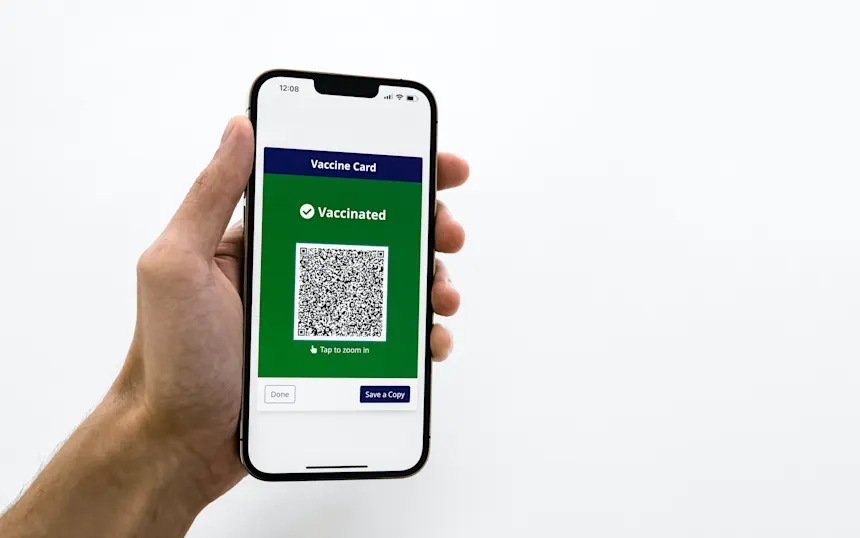
Court Support for Employers Enforcing Vaccine Mandates

In late 2021, many Public Health Directions requiring vaccination for certain workers and industries came into effect. In the New Year, many employers have been forced to deal with a small number of employees who have refused to comply with the vaccine direction.

Read more
Newsletter

Should I keep my employee's IHI number?

Knowing an employee’s vaccination status has been an important tool in managing the risks of COVID-19 in the workplace. However, there are some important privacy obligations placed on employers who hold a record of their employee’s vaccination status.

Read more

Covid-19

Can I provide extra pandemic leave to vaccinated employees?

Most likely, yes. While traditional Personal / Carer’s Leave is available to employees who have tested positive to COVID-19, there are many pandemic related reasons why workers may be unable to attend work which don’t fit comfortably with traditional leave entitlements. Mandatory quarantine periods for close contacts of positive cases remain common across Australia but unless employees are able to work from home, they may be forced to access Annual or Long Service leave in order to be paid for the period of isolation.

Read more

Covid-19

Reasonable requirements of employees prior to their return to work?

Employers are expected to be increasingly vigilant in managing COVID related risks in the workplace particularly when managing employees returning from an absence likely to involve COVID or at least a risk of it. But with the ever-changing public health regulatory landscape we understand that this has become difficult and places enormous strain on HR teams.

Read more

Covid-19

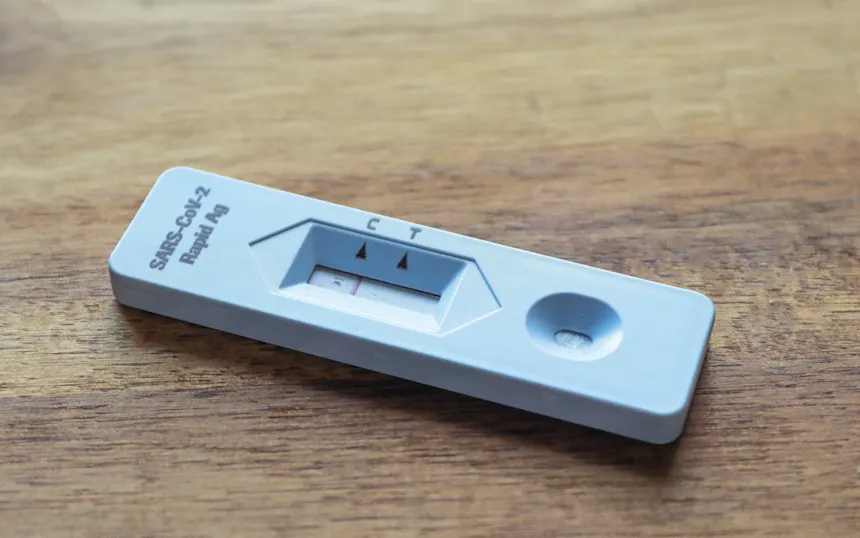
Are Rapid Antigen Tests 'good' evidence of incapacity or illness?

Most likely “Yes”. COVID-19 testing generally provides employer with the most valuable information in assisting employees to determine their level of risk to the workplace. However, long queues for traditional PCR tests, as well as changing eligibility criteria for them, has left a lot of the heavy lifting to Rapid Antigen Tests (RATs). Although less reliable than PCR tests, they are in our opinion an objective and safe way for workplaces to manage the risk of COVID-19. The prevalence of RATs is only likely to increase as availably issues are addressed across Australia.

Read more

Covid-19

What do we do when an employee won't comply with customer vaccination requirements for site entry?

We have previously discussed ways in which employers can navigate the emerging area of Public Health Directions / Orders to vaccinate, as well as implementing your own mandatory vaccination policies as a lawful and reasonable direction. But what if you aren’t subject to a Public Health Direction / Order and don’t have a mandatory vaccination policy of your own, but your business performs work for organisations that do – particularly for site entry?

Read more

Newsletter

Close and Casual Contacts - Rules

The borders have now fully opened up and we are now in a new stage of dealing with COVID –unfortunately just in time for the highly contagious Omicron variant to arrive and increase infection rates.

Read more

Covid-19

Has the BHP decision regarding mandatory COVID Vaccinations provided clarity?

FWC Full Bench Speaks A 5 member FWC Full Bench on Friday 3 December 2021 handed down its eagerly anticipated decision finding that BHP’s Mt Arthur mine’s Site Access Requirements for mandatory COVID-19 vaccinations was NOT reasonable because it had failed to comply with the WHS obligations to consult. You can find a copy of the full decision here (http://www.austlii.edu.au/cgi-bin/viewdoc/au/cases/cth/FWCFB//2021/6059.html)

Read more

Newsletter

Horticulture Award - Is this the end for piecework?

Employers in the Horticulture Industry have been scathing in their opposition to a recent FWC Full Bench decision which (pending a last minute appeal) looks likely to mean the practical end of the current piecework system.

Read more

Covid-19

Mandatory COVID Vaccinations - Pathway to Progression

There continues to be a flurry of activity around COVID-19 vaccinations. The trend appears to focus on businesses creating their own clarity by avoiding the complexity of competing options and compliance with public health orders by mandating vaccinations and the provision of vaccination status. The application of the mandate has been mixed. It ranges from targeted for certain areas or a comprehensive workplace application dependent on their individual risk assessments.

Read more

Newsletter

Casual clarity... finally!

The High Court has given an anti-climactic endorsement of the Federal Government’s ‘fixing’ of the casual definition issue by overturning the Full Federal Court decision in Rossato.

Read more

Newsletter

Has Good Faith Bargaining grown some teeth or gone too far this time?

The recent decision of Victorian Ambulance Union Incorporated v Health Select Pty Ltd t/a Health Select [2021] FWC 1434, 31 March 2021 in which the parties were ordered under the good faith bargaining (GFB) provisions back to the bargaining table has been welcomed by unions and criticised by employers.

Read more

Newsletter

Job Keeper Decisions

Whilst there is little doubt that JobKeeperhas done an excellent job at providing income support to business in a very short period of time –it has not unexpectedly created lots of uncertainty as to its practical application for a variety of employee entitlements.

Read more
Newsletter

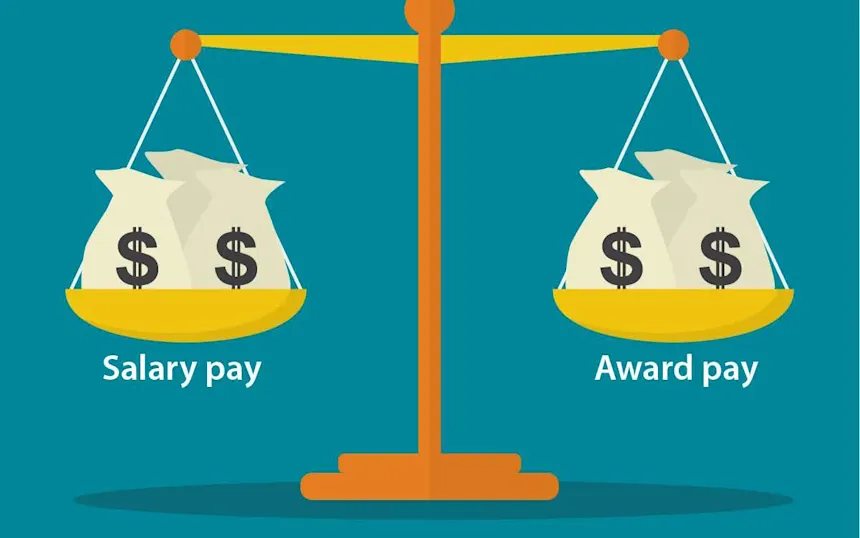
Variation of Enterprise Agreements

Many ofyou have been asking whether you are able to waive upcoming pay increases provided in yourEAor make other changes to your EAto assist you during the COVID-19 pandemic.

Read more
Tips & Trends

Sign up for our ‘Tips & Trends’ articles

You will get short, relevant articles on topical areas with actionable steps and real commentary.

We care about the protection of your data. Please do not include sensitive information. Read our Terms and Conditions.